Mobility Requirements for Olympic Weightlifting: An Evidence-Based Perspective from a Sports Physical Therapy Resident
Mobility Requirements for Olympic Weightlifting: An Evidence-Based Perspective from a Sports Physical Therapy Resident
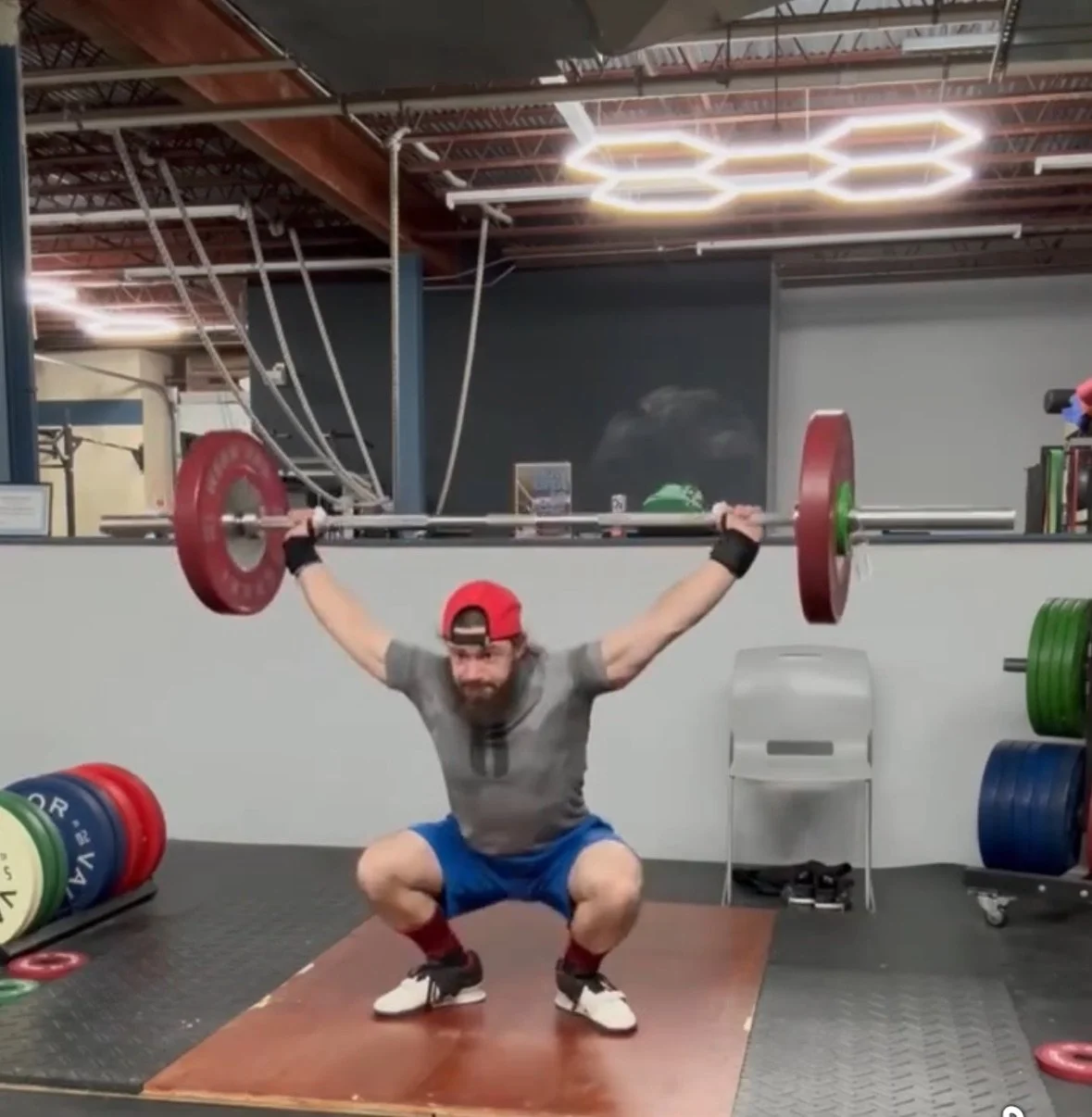
Olympic weightlifting places unique mobility demands on the human body that exceed those required in most athletic and resistance training contexts. The snatch and clean & jerk require the athlete to achieve and control end-range joint positions under high load, velocity, and fatigue. From a sports physical therapy perspective, insufficient mobility is not simply a performance limiter—it is a modifiable risk factor for technical breakdown and injury.
This article outlines the key joint-specific mobility requirements for Olympic weightlifting, synthesizing current biomechanical research, clinical evidence, and practical observations from sports PT residency training.
Defining Mobility in Olympic Weightlifting
Mobility is often misunderstood as passive flexibility. In weightlifting, functional mobility refers to the ability to actively achieve, control, and stabilize joint positions required for efficient lift execution. This includes:
Adequate joint range of motion (ROM)
Neuromuscular control at end range
Strength through the available ROM
An athlete may demonstrate “normal” ROM on clinical testing yet lack the capacity to express that motion dynamically under load.
Key Mobility Regions and Evidence-Based Requirements
1. Ankle Dorsiflexion
Why it matters:
Adequate ankle dorsiflexion is critical for achieving depth and maintaining an upright torso in the receiving positions of the snatch and clean.
Evidence:
Reduced dorsiflexion has been associated with compensatory pronation, heel rise, increased forward trunk lean, and altered knee mechanics during squatting tasks (Bell et al., 2008; Dill et al., 2014). In weightlifters, limited dorsiflexion commonly shifts load demands proximally to the knees and lumbar spine.
Clinical benchmark:
~35–45° of closed-chain dorsiflexion (measured via weight-bearing lunge test) is commonly observed in proficient lifters.
2. Hip Flexion and External Rotation
Why it matters:
Deep squat receiving positions require significant hip flexion combined with external rotation and abduction to maintain balance over the midfoot.
Evidence:
Studies demonstrate that restricted hip mobility increases lumbar flexion demands at squat depth, particularly under load (Schoenfeld, 2010; Squatting biomechanics literature). Excessive lumbar motion under high load may increase spinal tissue stress.
Clinical benchmark:
Deep squat without posterior pelvic tilt (“butt wink”) at competition depth
Sufficient hip ER to maintain knee-over-toe alignment in the catch
3. Thoracic Spine Extension and Rotation
Why it matters:
Thoracic extension allows an upright torso in the squat and proper bar positioning overhead and in the front rack.
Evidence:
Limited thoracic extension has been linked to compensatory lumbar extension and shoulder elevation strategies during overhead tasks (Kebaetse et al., 1999; Kibler et al., 2013). In Olympic lifts, this can compromise overhead stability and front rack mechanics.
Clinical benchmark:
Ability to maintain thoracic extension under load without excessive rib flare or lumbar compensation
4. Shoulder Flexion and External Rotation
Why it matters:
The snatch requires near-full shoulder flexion combined with external rotation and scapular upward rotation to achieve a stable overhead position.
Evidence:
Overhead athletes with limited shoulder flexion or ER demonstrate altered scapular kinematics and increased shoulder joint stress (Giphart et al., 2013). In weightlifting, inadequate shoulder mobility often manifests as forward bar drift, unstable lockout, or missed lifts behind.
Clinical benchmark:
Near-full shoulder flexion with elbows locked and bar positioned over the midfoot
Symmetrical ER without anterior shoulder symptoms
5. Wrist Extension and Elbow Flexion (Front Rack)
Why it matters:
Clean reception demands rapid transition into deep elbow flexion with significant wrist extension while maintaining thoracic extension.
Evidence:
While limited wrist mobility is common, excessive compensation via shoulder internal rotation or lumbar extension may increase cumulative tissue stress (Comfort et al., 2012). Importantly, elite lifters often demonstrate mobility that exceeds normative values due to long-term adaptation.
Clinical benchmark:
Front rack position achieved without excessive grip strain or forward elbow drop
Wrists tolerant of repeated extension under load
Mobility vs. Stability: A Clinical Caveat
Not all movement limitations require aggressive mobility intervention. Apparent “stiffness” may reflect:
Motor control deficits
Strength limitations at end range
Protective tone secondary to poor load management
From a sports PT perspective, mobility interventions should be targeted, tested, and integrated with strength and technical training, rather than applied globally.
Practical Implications for Lifters and Coaches
Assess mobility in task-specific positions, not isolated joints alone
Prioritize ankle, hip, thoracic, and shoulder mobility for most lifters
Integrate mobility work with positional strength training (e.g., pause squats, overhead holds)
Reassess regularly—mobility is adaptive and responsive to training load
Conclusion
Olympic weightlifting demands exceptional, sport-specific mobility that extends beyond general population norms. Evidence supports the role of adequate ankle, hip, thoracic spine, shoulder, and wrist mobility in optimizing performance and reducing compensatory movement strategies.
As a sports physical therapy resident, the clinical goal is not maximal mobility, but sufficient, controllable mobility expressed under load. When mobility deficits are identified and addressed within a comprehensive training plan, athletes are better positioned to lift efficiently, consistently, and safely.
Selected References (for further reading)
Bell DR et al. J Sport Rehabil, 2008
Dill KE et al. Sports Health, 2014
Schoenfeld BJ. Strength Cond J, 2010
Kibler WB et al. Br J Sports Med, 2013
Giphart JE et al. Am J Sports Med, 2013
Comfort P et al. J Strength Cond Res, 2012
Written By:
Matt Medeiros, DPT, SCS, USAW, CF-L2