Why Division 1 Bowlers Need to Lift: Building Strength for the Lanes
Why Division I Bowlers Need to Lift: Building Strength for the Lanes
Think bowling doesn’t require strength training? Think again.
Division I bowling is more physically demanding than it looks. Long practices, multiple games, repeated deliveries, tournaments, travel, and limited recovery can put serious stress on the body.
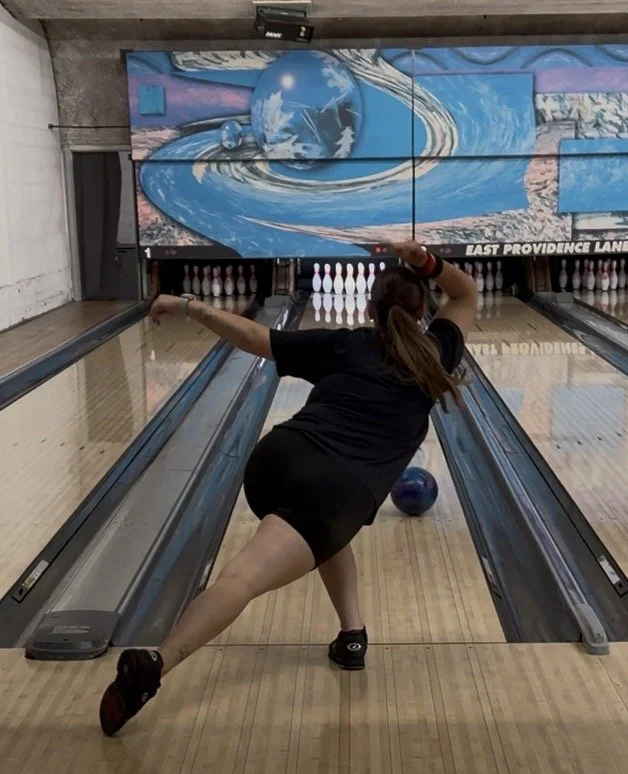
Every time you step onto the approach, your legs, hips, core, and upper body work together to create and control force. Your body has to be strong enough to repeat that movement hundreds of times while maintaining good technique.
That’s where strength and conditioning comes in.
Lifting isn’t about becoming a bodybuilder or trying to lift the heaviest weight possible. For bowlers, it’s about becoming stronger, more stable, more powerful, and more resilient on the lanes.
Stronger Body. Better Bowling.
A strong bowler isn’t just someone who can lift heavy. They’re someone who can control their body through the entire delivery.
Prevent Injuries
Bowling is repetitive. Over the course of a season, bowlers perform the same movements thousands of times. This can place stress on the knees, hips, ankles, back, shoulders, and wrists.
Strength training helps prepare the body to handle that workload.
Exercises that target the quads, hamstrings, glutes, core, shoulders, and upper back can improve stability and help support the bowling motion.
Create More Power
Ball speed doesn’t come from your arm alone.
Power starts with the lower body, moves through the hips and core, and finishes through the upper body and bowling arm.
Training the entire body allows bowlers to produce and transfer force more efficiently, which can contribute to a stronger and more consistent delivery.
Improve Balance and Stability
Think about your slide. You’re moving forward, transferring your weight, and trying to stay controlled on one leg—all while delivering a bowling ball.
That’s not easy.
Single-leg exercises such as split squats, step-ups, and single-leg Romanian deadlifts can help build the balance and stability needed to control that position.
Stay Strong Through the Tournament
A tournament isn’t one shot. It’s hundreds.
As fatigue builds, technique can start to break down. Strength and conditioning can improve muscular endurance and help bowlers maintain better movement and mechanics throughout long practices and competition days.
Exercises Every Bowler Should Know
A good bowling program should focus on full-body strength, single-leg stability, core control, and shoulder health.
Tap any blue exercise name to watch a quick demo video.
Power
The goal isn’t to do every exercise at once. Your program should be structured around your individual needs, bowling schedule, and experience level.
Warm Up Like an Athlete
Don’t walk into the weight room—or onto the lanes—cold.
A good warm-up gets your body ready to move and helps you feel prepared for training.
Try:
- 3–5 minutes: Walking, biking, jogging, or jump rope
- 3–5 minutes: Leg swings, walking lunges, hip circles, arm circles, and thoracic rotations
- 2–3 minutes: Glute bridges, band walks, dead bugs, and band pull-aparts
Your warm-up should leave you feeling ready to perform, not tired before you start.
Recovery Is Training Too
Here’s something every college athlete needs to remember:
More training doesn’t always mean better performance.
Your body needs time to recover and adapt.
Prioritize the basics:
- Sleep. Give your body and brain time to recover.
- Nutrition. Fuel your training with enough calories, protein, carbohydrates, and fluids.
- Mobility. Keep your hips, ankles, shoulders, and upper back moving well.
- Rest. Taking a day off doesn’t make you lazy. It helps you come back stronger.
- Manage your workload. Bowling practice, lifting, tournaments, school, and recovery all need to fit together.
Build Bowlers, Not Just Strength
The goal of strength and conditioning isn’t to turn bowlers into powerlifters.
It’s to build better bowlers.
You want to be stronger in your approach, more stable in your slide, more powerful through your release, and more resilient when tournament day gets long.
Your strength program should complement your bowling—not take away from it.
You don’t need to lift just to lift. Lift to become a better athlete.
Because strength for a Division I bowler isn’t about how much you can put on the bar.
It’s about what you can do on the lanes.
Author: Brianna Mester, Bryant University Class of 2027