Trail Running vs. Road Running: Athlete Considerations, Shoes, Demands, & Injuries
Trail Running vs. Road Running
Running may seem simple: put on a pair of shoes and start moving. However, where you run can
completely change the demands placed on your body. Road running and trail running differ in
pace, footwear, elevation, muscle use, metabolic demand, impact forces, and injury risks. Neither
is necessarily better than the other, and using a combination of both may actually make you a
more well-rounded runner.
Road Running
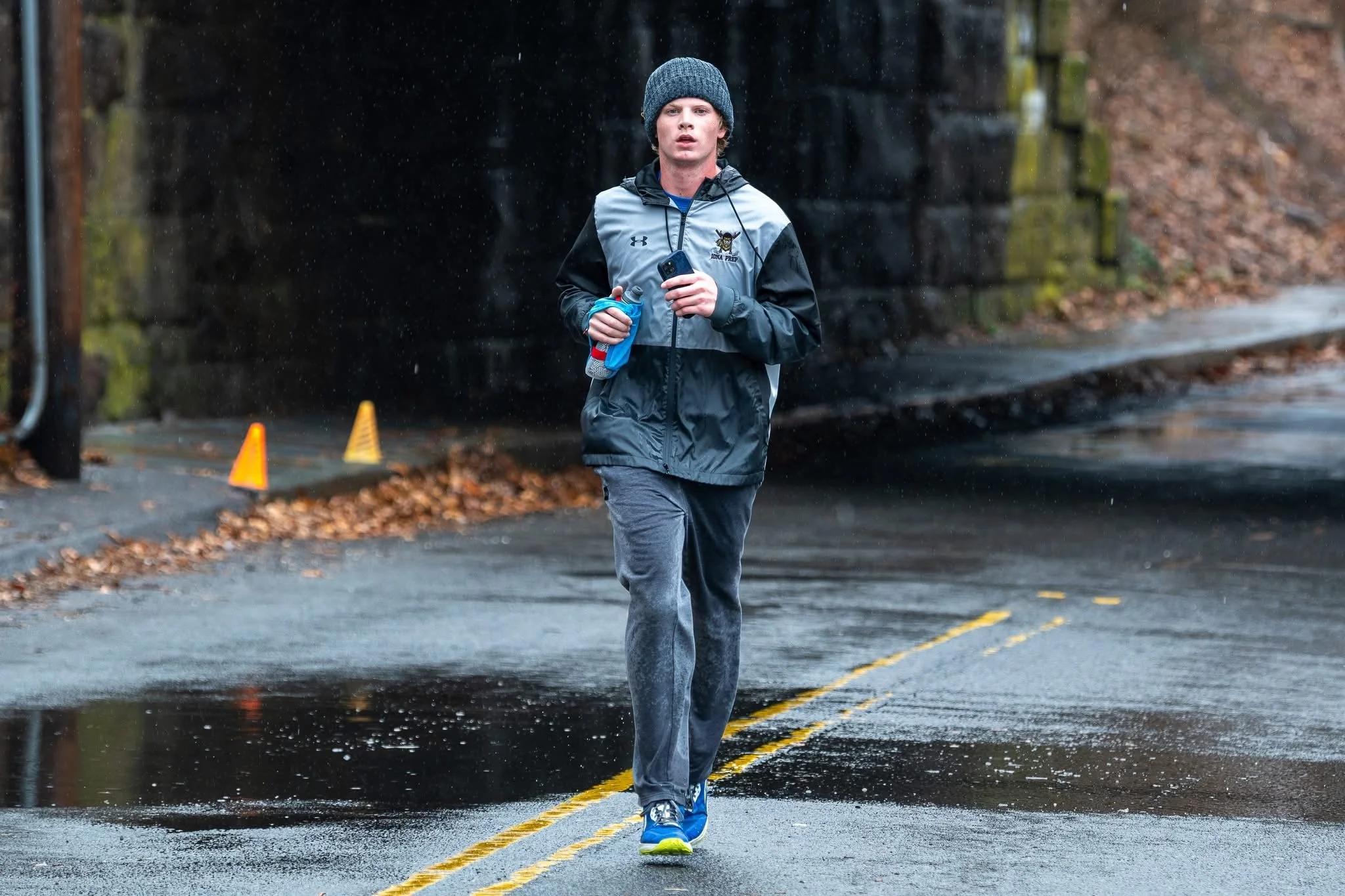
Road running includes running on roads, sidewalks, bike paths, and other relatively smooth
surfaces. One of its biggest advantages is consistency. Because there are fewer rocks, roots, steep
climbs, and sharp turns, it is much easier to settle into a rhythm and maintain a specific pace.
This makes the road especially useful for tempo runs, intervals, marathon-pace workouts, and
other workouts where pace matters. It is also easier to compare one run to another and measure
improvements in fitness.
However, the predictable surface means you repeat nearly the exact same movement thousands
of times. This repetition can become important when considering injury risk, especially when
mileage increases quickly.
Trail Running
Trail running can range from running on a smooth dirt path to climbing steep mountains covered
in rocks and roots. Because the terrain constantly changes, your stride has to change with it.
The first thing a road runner should understand before trying trail running is that your trail pace
will usually be slower than your road pace. If you normally run eight-minute miles on the road,
you should not expect to maintain that pace on a technical or hilly trail.
That does not mean you are getting a poor workout. You could be running several minutes per
mile slower while producing an equal or greater effort.
For this reason, effort, heart rate, elevation gain, and time on your feet can be more useful than
pace when evaluating a trail run. Walking is also completely normal. On a steep climb, power
hiking can sometimes be more efficient than forcing yourself to run.
The Surface Matters
The surface underneath your feet changes how running feels and how forces are applied to your
body.
Concrete is a very stiff surface and provides little deformation when your foot contacts the
ground. Asphalt is also a firm surface, although generally somewhat less rigid than concrete.
Roads and sidewalks are predictable, but your body repeatedly experiences similar loading
patterns because every step is so similar.Grass and softer dirt trails deform more underneath your foot. They can feel more forgiving,
although softer does not automatically mean injury-proof. Uneven grass can also require more
work from the ankles and stabilizing muscles.
A rocky or technical trail is more complicated. The ground itself may include dirt and other
softer material, but individual rocks are extremely hard. More importantly, the surface is
irregular. Your foot might land at a slightly different angle with every step. This reduces some of
the repetitive nature of road running but increases demands on balance, coordination, and ankle
stability.
Uphill vs. Flat and Downhill Running
Elevation changes the type of stress you experience just as much as the surface does.
Uphill running is generally harder metabolically and muscularly but can produce lower impact
loading than fast flat or downhill running. You have to overcome gravity to move your body
upward, increasing the cardiovascular and muscular effort required even though your pace
becomes slower. Your glutes, calves, hamstrings, and quadriceps are the main muscles working.
At the same time, uphill running usually involves a shorter stride, slower speed, and less severe
landing forces. This makes hills an interesting training tool: you can create an extremely difficult
cardiovascular and muscular workout without needing to run particularly fast.
Downhill running presents almost the opposite situation. Your cardiovascular effort may
decrease because gravity is helping you move downward, but your body has to absorb and
control considerably more force. Your quadriceps perform large amounts of eccentric work,
producing force while lengthening to keep you from falling down the hill.
This is why you can finish a long downhill run without feeling as cardiovascularly exhausted as
you would after a major climb but wake up the next morning sore.
Different Shoes for Different Terrain
Road and trail shoes are designed around these different environments.
Road shoes usually emphasize cushioning, responsiveness, low weight, and efficient forward
movement. Their outsoles are designed primarily for relatively smooth surfaces.
Trail shoes usually have deeper outsole lugs that can grip dirt, mud, loose rocks, and other
uneven surfaces. They tend to have additional protection around the foot, and some include rock
plates to protect against sharp rocks.
Muscular and Metabolic Demands
Trail running generally involves more variation in muscle recruitment than road running.Your ankles and feet stabilize your body on uneven ground. Your glutes and calves work harder
during climbs. Your quadriceps experience significant eccentric loading during descents. Your
core and hips help control your body as you navigate turns and irregular terrain.
The metabolic demands also fluctuate. A road run might allow you to maintain a relatively steady
heart rate and effort for an hour. During a trail run, you could move from an easy flat section to
an extremely difficult climb, walk briefly, descend, and then climb again.
This is another reason why looking at the distance alone can be misleading. Ten flat road miles
and ten mountainous trail miles can be completely different workouts.
Common Injuries
The different demands of road and trail running can also produce different injury patterns.
Road runners commonly deal with overuse injuries because of the repetitive nature of running on
predictable terrain. Problems such as shin pain, achilles tendon issues, plantar fasciitis,
patellofemoral pain around the knee, and other repetitive-load injuries can occur. These sorts of
injuries happen when training volume or intensity increases too quickly.
Trail running still has overuse risk, but technical terrain adds a greater chance of acute injuries.
Ankle sprains can occur from landing awkwardly on a rock or root. Falls can cause cuts, bruises,
or other injuries. Long climbs can overload the calves and cause a muscle strain. Repeated steep
descents can cause quadriceps soreness that may lead to knee discomfort.